Finding a perfect clipper brings you investigating motor powers, measuring cable lengths, comparing voltage, choosing blade materials (should you go ceramic and what does it even mean?), and eyeing the cut length. Long story short, you’re three hours in and more lost than ever. This hair clipper buying guide is designed to be your ultimate resource on all things you must know: features, parameters, maintenance tips, and how to choose the device that would suit you personally.
Hair Clipper Types: Corded or Cordless?
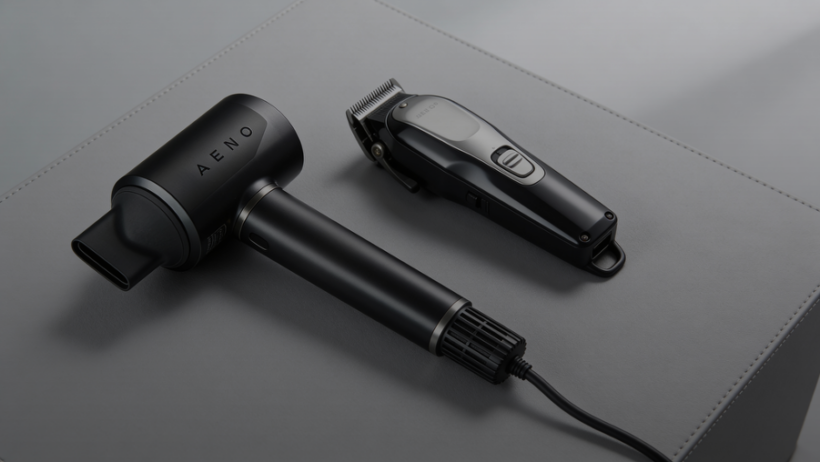
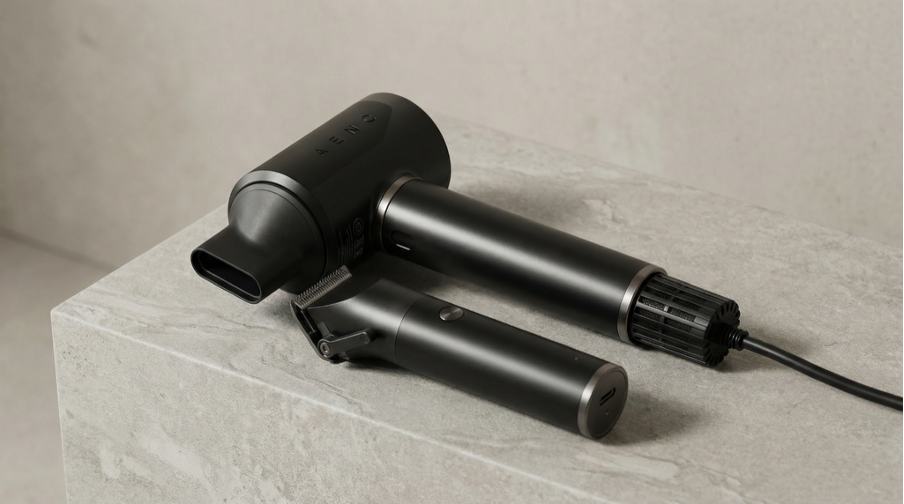
Deciding whether you should go corded or cordless is your first major consideration. Imagine you’re looking for the closest socket, plugging the device, and find that the cord is too short. Now, you attempt to achieve an even cut while at half-crouch. Of course, you can always go cordless, but the freedom of movement comes with a heftier price tag and other major drawbacks. Ultimately, all hair clippers come with their strong pros and tradeoffs. Here’s what to expect:
Corded Clippers
Great choice if you don’t plan to travel often or for longer grooming sessions that include full haircuts. The cable length should be your main focus here, as well as the model’s universal voltage if you plan to make frequent trips.
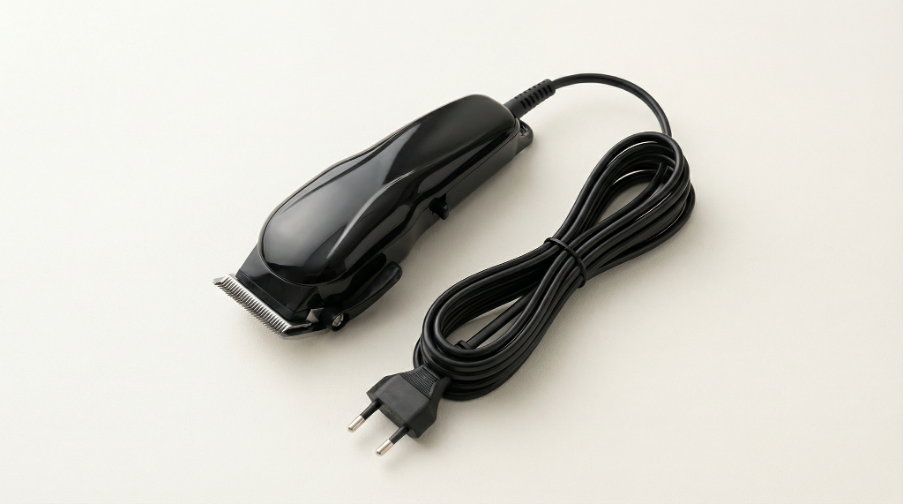
Pros:
- Stable power and high reliability;
- No anxiety that the battery drops dead and you’re left with a half-buzz, half-grown haircut;
- Cheaper ($30–$80) than cordless models.
Cons:
- Cord may provide unlimited movement but also tugs during tricky spots;
- Slightly heavier;
Overall, it works best for routine home use or professional settings.
Cordless
Ultimate freedom of movement: you can clip your hair while in the shower or on vacation. The battery is rechargeable, so when choosing a model, pay attention to battery type (Li-Ion batteries are pricier but better than Ni-MH ones, which have longer charging times and slowly lose their capacity), charging time, and battery life.
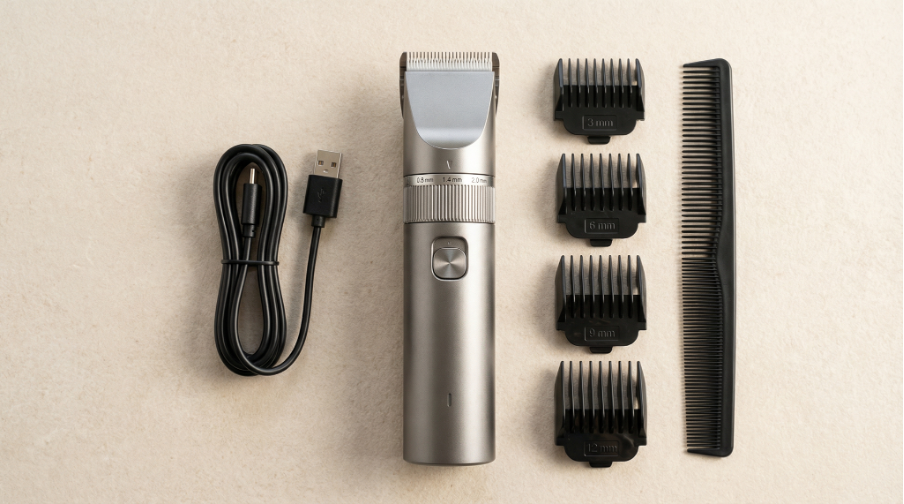
Pros:
- Portable and almost lightweight;
- Rechargeable battery.
Cons:
- Price is heftier ($50–$150).
- Typically has lower power.
Overall: convenient for in-home and out-of-home use.
Hybrid
Best of two worlds, hybrid clippers combine utility and portability. You get freedom of movement with an option to plug in for extended use.
Pros:
- Unplug for mobility, plug in for all-day power.
Cons:
- Much more biting prices ($80–$200).
Overall, hybrid models are the most practical options, suitable for travel and routine home grooming sessions.
Professional vs. Home Clippers
Some professional clippers now have app integration for fade guides. Fancy, right?
| Professional | Home Clippers | |
| Power | 90–120 W (corded) 12–25 W (cordless) | 10–25 W (corded) 8–15 W (cordless) |
| Durability | Titanium/DLC-coated lades stay sharp for 1,000–3,000 hours Lifespan: 5-15 years | Stainless steel dulls after 200–500 hours Lifespan: 1–4 years |
| Precision | Blade can be zero-gapped (0.1–0.2 mm) | Around 0.8–1.5 mm, while apps can add more precision |
Main Parameters to Pay Attention to
After deciding which of these types of hair clippers suits you best, it’s time to consider other essential features.
1. Motor Power
When shopping for a hair clipper, one of the most important things to pay attention to is the motor type and its power. Here are three you should know:
- Magnetic motor (typically fixed speed, around 6,000–7,200 SPM) — fast, light, a little noisy, but weakest under load.
- Pivot motor (around 3,000 SPM) — more torque and quieter than magnetic.
- Rotary motors (3,000 to 8,000 SPM) — most powerful, more consistent under resistance, and the quietest.
Ultimately, rotary motors are the most versatile and best suited to professionals. Casual owners, on the other hand, should go for pivot motors due to affordability and power.
2. Power Type
Corded hair clippers offer unlimited runtime and don’t suffer from battery degradation, although that pesky cord can still get in the way. As for cordless clippers, you can get about 90–120 minutes on a full charge, although in 2 to 4 years, the battery will show the first signs of weakening.
3. Blades
The quality of your hairstyle directly depends on the sharpness and material of the blade. Here are the most popular options:
| Blade Material | Durability & Feel | Sharpness & Longevity | Rust-proof/Washable | Heat | Price | Best For |
| Titanium | Survive everything, 3x sharper than steel | Self-sharpening, stay sharp for years | Yes + washable | Gets warm | Premium | Pro barbers, thick/curly hair |
| Ceramic | Chip if you drop it, fragile | Don’t get dull | Yes + washable | Never overheats | High | Long sessions, sensitive scalps |
| Japanese Steel | Tougher than regular steel | Razor-sharp, holds edge for a long time | Most model | Gets warm | High | Advanced cutting techniques, crisp lines |
| Stainless Steel | Solid middle ground, durable | Good sharpness, lasts long enough | Yes + washable | Can get hot | Affordable | Routine use, occasional cuts every few weeks |
| Regular Steel | Works good enough | Blunts quickest | Can rust + don’t get wet | Heats up fast | Budget | Basic needs, casual haircuts |
4. Length Adjustment and Attachments

There are two ways to adjust the length range: you can fine-tune blade positions via the lever (located on the hair clipper’s side) for minor changes or use attachment combs. Adjusting the lever is a good idea if you want to achieve a smoother fade and prolong blade sharpness. Combs, on the other hand, have distinct fixed lengths, suitable for consistent cuts and bigger length jumps (depending on the attachment).
5. Additional Features
To further enhance user experience, look for these extra features:
- Quiet operations — the hair clipper is equipped with professional-level motor insulation that keeps the device below 50–60 decibels, so it won’t sound like you fired up a mower in your bathroom.
- Battery indicators — LCD or LED displays show everything from remaining charge to blazing-red alerts that it’s time to clean it.
- Turbo mode — a temporary boost in motor speed or cutting power, excellent for thick or coarse hair.
6. Ergonomics and Weight
Using a heavier device, especially during long grooming sessions, can quickly strain your hand. Look for a hair clipper with an ergonomic, grip-friendly design and a weight of 150–250 grams.
7. Maintenance and Cleaning
Look for washable blades: you can rinse them under water when needed and check whether your hair clipper model is water-resistant or splash-proof (you can quickly rinse the body under water). Some models are fully waterproof, so they can be submerged entirely. Also, check whether a brush kit is included with your specific model.
How to Choose a Clipper Based on Your Needs
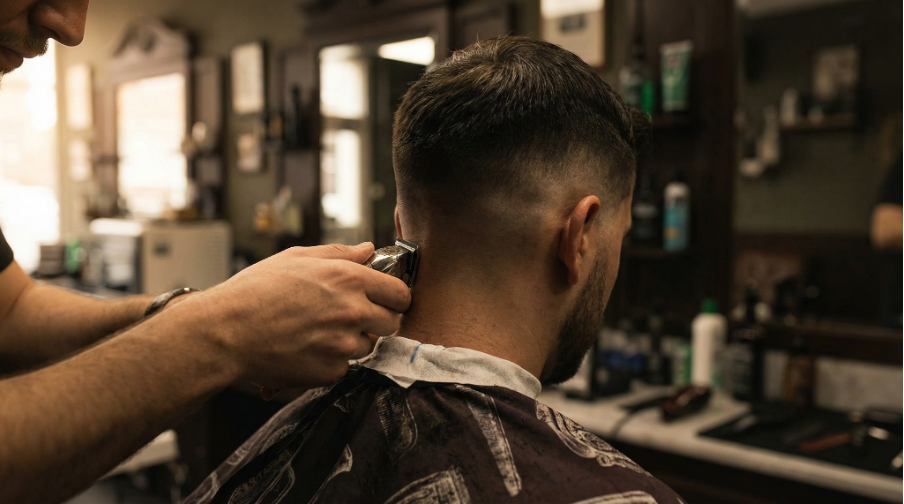
When searching for ‘how to choose a hair clipper,’ your top considerations should be your lifestyle and hair type. Here’s a quick guide to help you find the model that suits you.
For Short Haircuts
Want a clean buzz cut, a short trim, or a super-precise style like a fade or line-up? Go for compact models with precise length settings. They are small and light to maneuver (even with the cord attached), so you can twist and turn them around the ears, neckline, or beard.
For Thick Hair
You’ll need a heavy-duty motor and steel blades that can handle your mane (it works for coarse hair, too). Go for rotary or high-torque motors — they won’t slow down or yank your strands, no matter how much hair you’re plowing through.
For Travel
You don’t want to drag around a hair clipper with a two-meter cord, so opt for lightweight cordless models instead. Modern lithium-ion batteries will give you 90–120 minutes on a single charge.
For Barbers
Pros need to choose heavy-duty models with metal housing and a 2–3-meter-long cord. These hair clippers are a little heavier, but everything from ergonomics to lower vibration and quickly detachable blades makes them a top-notch choice for professional barbers.
Hair Clipper Maintenance Tips
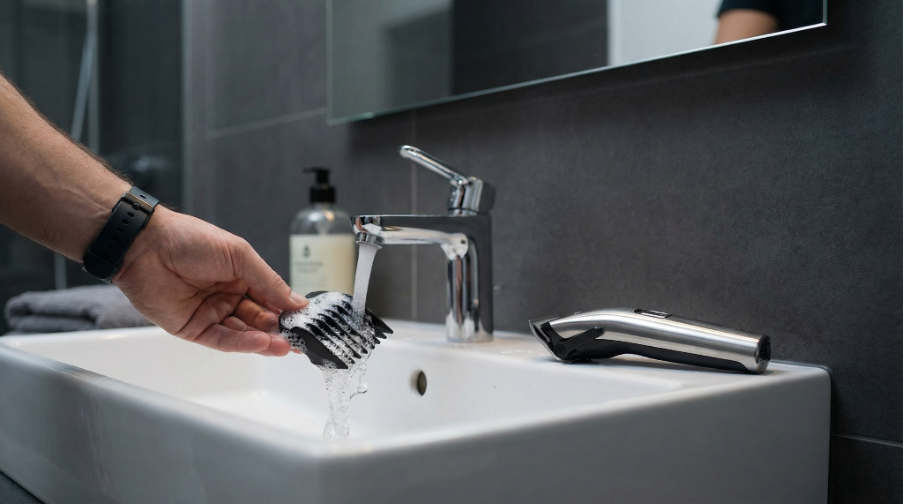
Whether you’ve invested in the best hair clipper on the market or picked up a budget model, proper maintenance techniques will keep your device sharp and functional for years to come. Here’s what you should do:
- Clean the blades after each use. Over time, hair, skin oils, and product buildup accumulate on the blades. After each cut, unplug the device, pop the blade off (if detachable), and use a cleaning brush to sweep out all the trapped hair. Once a month, rinse the blades under warm water with a drop of dish soap or use a blade wash spray. Remember: never put a wet blade back on. It’s the quickest way to make it rust.
- Oil the blades regularly. This is another non-negotiable: after every 2–3 cuts, apply a couple of drops of clipper oil across the teeth. To spread it evenly, turn on the clipper for 10 seconds.
- Don’t store in humid bathrooms. Moisture and rust go hand in hand, especially on steel blades. Keep your device in a cabinet or a dry drawer.
- Fully charge before first use. Lithium-ion batteries work best when kept between 20% and 80% charge. To prolong their lifespan, don’t drain the battery to 0%, and don’t charge to 100% before the first use.
- Check the condition of attachments. Keep an eye on combs and replace them when bent or cracked. Using damaged combs risks everything from inconsistent pressure and uneven cuts to hair getting caught in cracks and yanked.
If you’re still in the ‘how to choose a hair trimmer’ phase, picking one essentially boils down to your hair type, grooming needs, and preference for portability. Go cordless for travel, pro for power, and regardless of the model you choose, remember: good maintenance will keep it performing at its best for years.
 Tatyana Ryzhova