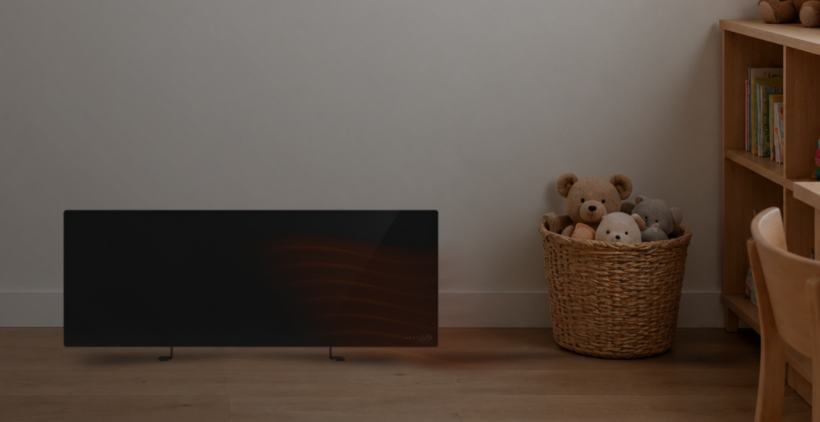
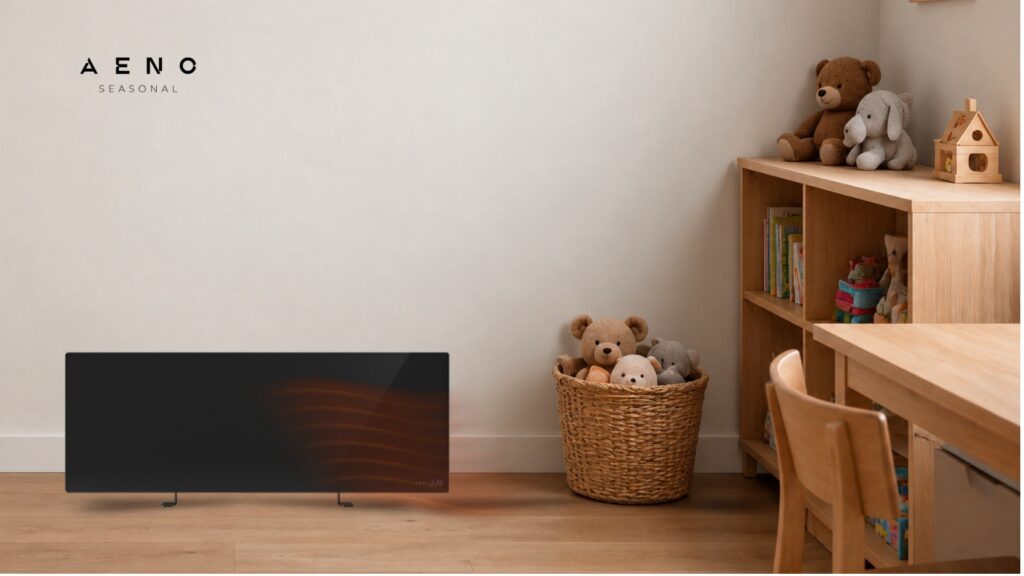
The best type of room heater for children is an infrared panel heater, preferably with advanced safety features. This type of heater provides consistent, gentle warmth, preserves air quality, and is commonly considered the safest space heater for nursery environments. Modern solutions like AENO Premium Eco Smart infrared panel heaters combine this heating method with smart safety controls, making them especially suitable for families with young children.
Best room heater for infants, nursery and children’s rooms
When you choose the best room heater for your children, you don’t think just about keeping them warm – it’s more about making sure they have a safe and healthy place to sleep. Most experts agree that infrared panel heaters are the best option because they help to prevent overheating, reduce safety risks, and keep the air inside the room clean, which is a big deal because the majority of the traditional heaters can actually make the air worse. And this is especially important for infants, as they are more susceptible to the negative effects of poor air quality, and a good device can make all the difference in keeping them healthy and happy.
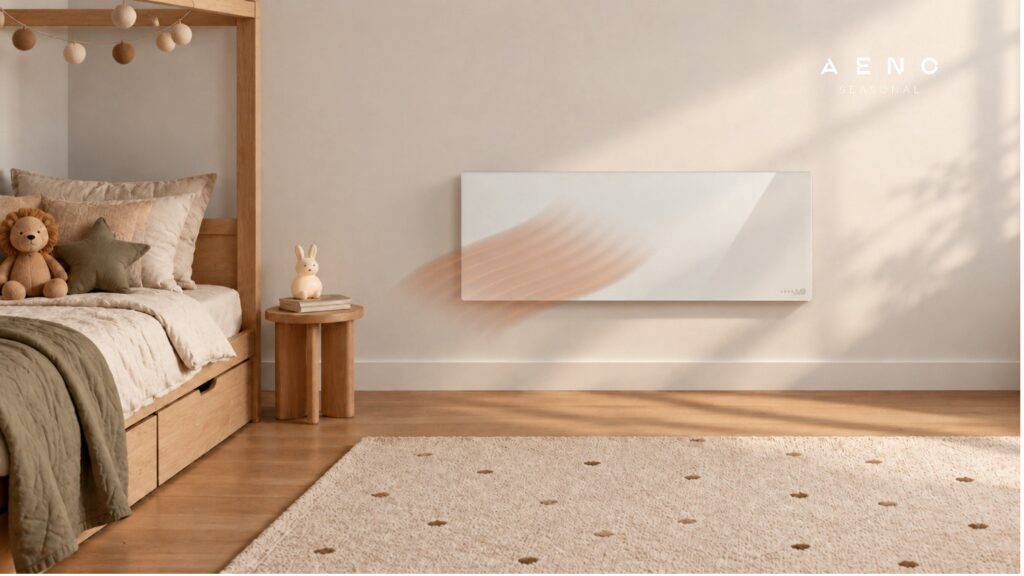
AENO Premium Eco Smart heaters use infrared technology, which works like natural sunlight: gently heating objects and surfaces rather than over-heating the air to cause a more comfortable and pleasant atmosphere.
Why Heating a Nursery is Different (and Requires Extra Caution)
A nursery is a room that require mora attention to its heating and humidity level than the rest of the home. Babies can’t control their body temperature as well as grown-ups can. This makes them really sensitive to cold temperatures and overheating, so you have to be careful. If it’s too cold, they might get chilled, and if it’s too hot, they could overheat. It’s all about finding that perfect balance to keep them cozy and safe.
It’s really important to keep the room at a comfortable temperature, between 68-72°F, which is around 20-22.2°C. This is what pediatric experts recommend, and it’s not just about the number on the thermometer. Minor changes in temperature can affect the way your child sleeps and feels overall. A stable environment is key, so it’s worth paying attention to the temperature in your child’s room to make sure it’s just right.
To keep newborns safe and healthy, it’s really important to have a reliable heater in their room that can keep the temperature steady. A good heater with a built-in thermostat can help prevent the room from getting too hot, which can be very dangerous for babies. The AENO Premium Eco Smart Heaters perform even smarter and let parents check and control the temperature from another room, or even from their phone, which is a big plus for keeping things stable and safe. This way, parents can have peace of mind knowing their baby is comfortable and secure.
Must-Have Safety Features for a Baby-Safe Heater
When you consider a heater for nursery, safety features are the first things you should pay attention to. Below we collected the most essential elements that define the best heater for infants’ rooms:
- Tip-over protection: Automatically switches the device off if it falls
- Overheat protection: Prevents dangerous internal temperature buildup
- Automatic shut-off: Turn the heater off in unsafe conditions
- Cool-touch housing: Minimizes the risk of burns on contact
Additional features that improve safety and comfort:
- Built-in electronic thermostat for better temperature control
- Child lock to prevent accidental adjustments
- Silent operation to protect the baby’s sleep
- Smart control via mobile apps for remote monitoring
Heating without forced air circulation helps maintain healthy humidity levels and reduces dust circulation.
This is particularly important, as poor air quality and low humidity can lead to skin, irritation, and discomfort for infants.
AENO Premium Eco Smart heaters also can send alerts right to your phone if they get knocked over or need some attention, giving you even more control over what’s going on.
The Best Types of Heaters for a Baby Room
Let’s compare the most common infant space heater types to discover their strengths and weaknesses in effective and healthy children room heating:
| Heater Type | Heating Method | Pros | Con |
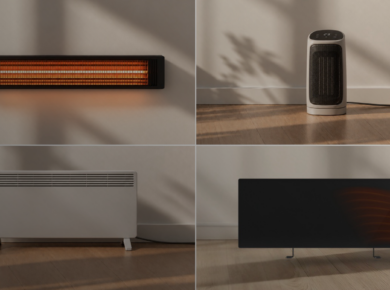
| Infrared Panel Heater | Heats objects and surfaces | Maintains humidity levels, no dust circulation, silent, energy-efficient, comfortable radiant heat | Needs correct placement |
| Oil-Filled Radiator | Heats oil internally, heats air | Even, long-lasting warmth, ideal for big rooms | Slow heating, heavier design, oil leaks are possible |
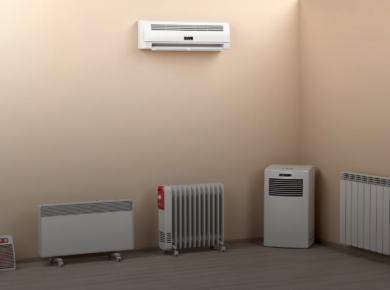
| Fan Heaters | Fan-forced air heating | Fast heating, compact size | Dry air, creates noise, circulate dust |
Now we can clearly see that the infrared panel heater is counted to be the best room heater for infants because they provide stable warmth without disrupting air quality. Unlike fan-heaters, they do not blow air, which helps maintain natural humidity levels and reduces the risk of dry skin and respiratory irritation and in comparison, with Oil-filled heaters they can adjust the temperature faster and have a more attractive and interior-friendly design.
Types of Heaters to Strictly Avoid in a Baby Room or Nursery
Some kinds of heaters may be pretty unsafe for using in children’s rooms, to avoid the unnecessary risks it’s better to never use in a nursery:
- Gas or propane heaters. Bring the risk of carbon monoxide exposure.
- Radiant or coil heaters with exposed elements. All visible (and touchable) elements of the heating lead to the high risk of burns and fire.
These two options do not meet the safety requirements expected from safe room heaters for infants.
5 Safety Rules for Using a Heater in a Child’s Room
- Keep the heater at a safe distance of at least 1 meter (3 feet) from the crib, bedding and other textile elements of the interior, like curtains.
- Always use a heater with automatic shut-off and other safety protection features.
- Maintain a stable temperature using a built-in thermostat and SMART functions on your heater.
- Avoid using extension cords; plug the heater directly into a wall outlet to reduce fire risk.
- Always follow the manufacturer’s safety instructions and guidelines.
Following these rules significantly reduces risks and ensures a safe sleep environment for your babies.

 Tatyana Ryzhova