
How much time are we really willing to spend on cleaning? If you are not particularly fond of household chores and would rather dedicate your free time to work, family, hobbies, or relaxation, a robot vacuum cleaner can become an ideal assistant for your home. But can a robot vacuum cleaner completely replace a regular vacuum cleaner? Which option offers better functionality and cleaning quality: a robot vacuum cleaner or a traditional model? Let us compare the main features of both types of household appliances and find out which solution is best for different cleaning tasks.
Easy to use

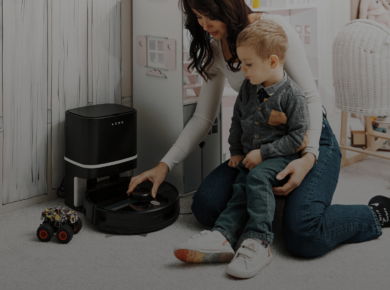
Smart cleaning according to a schedule is one of the main advantages of a robot vacuum cleaner. Users can set a convenient cleaning schedule, and at the selected time, the device will automatically start working, collecting dust, pet dander, hair, crumbs, and small pieces of everyday debris from the floor.
Robot vacuum cleaners are particularly useful for reaching places that are difficult to clean manually. Their compact dimensions and low-profile design allow them to move underneath sofas, beds, cabinets, and other pieces of furniture where a traditional vacuum cleaner may simply not fit. As a result, areas that are often overlooked during regular cleaning can be maintained more consistently.
Robotic vacuum cleaners are smart devices capable of creating a cleaning plan for the available area and navigating around the room independently. When the battery level becomes low, the robot can automatically return to its charging base. After recharging, depending on the model and settings, it can continue the cleaning process instead of requiring the user to start everything again.
Of course, it is impossible to guarantee that your robot vacuum cleaner will never get confused or encounter an unexpected obstacle in the apartment. However, modern manufacturers equip their devices with various navigation systems that allow them to plan routes, move through assigned areas, and avoid obstacles. This does not mean that you can simply leave socks, cables, toys, or other small objects scattered across the floor. With a regular vacuum cleaner, there is a possibility that a small item can accidentally be sucked into the cleaning system. A robot vacuum cleaner, after detecting such an obstacle, will generally attempt to change direction or stop, depending on the type and sensitivity of its sensors.
For example, the AENO brand uses remote sensing technology called “lidar” in its robot vacuum cleaners. Using a laser reader, the device collects information about the surrounding floor area. This data can then be used to create 3D models and maps of the space and objects that need to be cleaned. Smart mapping stores information about the environment and helps the robot move more efficiently, avoiding obstacles and covering the necessary areas without unnecessary movements.
Floor-level differences and thresholds should not necessarily become a major obstacle either. However, when choosing a robot vacuum cleaner, users should pay attention to the maximum threshold height that the particular model can overcome. Manufacturers normally indicate this specification, so it is worth checking it in advance, especially if your home has transitions between different rooms or floor coverings.
Setting up and operating a robot vacuum cleaner is also relatively intuitive. Most manufacturers provide a dedicated mobile app that allows users to control the device remotely. The application can be used to create a cleaning schedule, set the robot to start automatically at a particular time every day, select cleaning areas, or launch the device remotely. For example, if you suddenly decide to invite guests over, you can start cleaning without having to be physically present at home.
Operating a robot vacuum cleaner is considerably more convenient than taking a regular cleaner out of a storage area, connecting the power cord, carrying it around the apartment, and repeatedly looking for a suitable electrical outlet. The cleaning area of a corded regular vacuum cleaner is also limited by the length of its cable. A cordless vacuum cleaner provides greater mobility, but it still requires the user to perform the cleaning manually and spend time and effort controlling the device.
Another important advantage is that a robot vacuum cleaner can work while you are doing something else. It can clean the floor while you are working, preparing dinner, relaxing, or even sleeping, depending on your preferred schedule and the noise level of the device. This turns cleaning from a task that requires your constant participation into a routine process that can largely happen automatically.
By the way, a robot vacuum cleaner is also relatively easy to maintain. A smart device can usually detect when its dust container needs attention and notify the user that it should be emptied. Some models also provide additional notifications through the mobile application. With a regular vacuum cleaner, such monitoring is generally much more dependent on the user, who has to check the condition of the dust container or filter manually.
Cleaning quality
A robot vacuum cleaner effectively collects dry debris, dust, pet hair, crumbs, and other small particles from the floor. However, the actual cleaning quality depends significantly on the type of surface being cleaned. Robot vacuum cleaners perform particularly well on relatively flat and unobstructed surfaces. In many cases, removing fresh debris from a hard floor is not difficult, and short-pile carpets can also be cleaned effectively.
A high-pile carpet, however, can present a much greater challenge. Depending on its construction and the characteristics of the particular robot vacuum cleaner, the device may have difficulty moving across the surface or collecting debris deep between the fibers. Therefore, it is better not to rely exclusively on a robot for this type of flooring. A regular vacuum cleaner, cordless vacuum cleaner, or even a steam mop may be more appropriate for certain deep-cleaning tasks. A steam mop can not only help clean some surfaces but may also provide additional hygienic treatment where appropriate.
Robot vacuum cleaners are not limited exclusively to dry cleaning. Many modern models can also perform wet cleaning. To use this function, the appropriate water tank must be filled and installed in the device. If wet cleaning is included in a scheduled routine, the water tank should be prepared beforehand so that the robot can begin according to the selected schedule.
After the cleaning process is finished, the microfiber cloth should also be washed or replaced as required. It is important to understand that a robot vacuum cleaner performing wet cleaning is not exactly the same thing as manually washing the floor. The robot generally wipes the surface using a controlled amount of water rather than replacing a full manual floor-washing process.
Modern devices can offer several water-supply modes that can be selected according to the type of flooring and the level of dirt. This makes it possible to adapt the cleaning process to different everyday situations. Electronic control of the water supply with three selectable modes — low, medium, and high — is available, for example, in models from the AENO brand. Such settings allow users to choose a more suitable cleaning scenario depending on the floor covering and the degree of contamination.
The only task that a robot vacuum cleaner generally cannot perform on its own is cleaning furniture and other elevated surfaces. When you need to clean sofas, upholstered furniture, curtains, mattresses, shelves, or certain parts of carpets, you will still need a conventional or upright cordless vacuum cleaner and, depending on the task, possibly a steam mop.
The quality and type of cleaning should also be considered in relation to the current level of dirtiness. If a room requires extensive general cleaning, a washing or upright cordless vacuum cleaner can be a useful solution. A steam mop can also be helpful for appropriate hard-floor surfaces. Such large-scale cleaning is normally required less frequently, perhaps several times a year, while everyday maintenance can be handled much more conveniently by a robot vacuum cleaner.
This distinction is particularly important in modern homes where people want to maintain a consistently clean environment without spending hours on household chores. A robot vacuum cleaner is not necessarily designed to eliminate every other cleaning appliance. Instead, its greatest strength is regular maintenance: it removes everyday dust and debris before they have a chance to accumulate. This can make subsequent deep cleaning easier and less frequent.
In 2026, the difference between traditional and robotic cleaning appliances is becoming less about choosing one device exclusively and more about combining the right technologies for different household tasks. A robot vacuum cleaner can handle routine floor maintenance automatically, while a cordless or traditional vacuum cleaner can remain available for furniture, corners, stairs, high-pile carpets, and intensive cleaning.
Noise level

Noise can be an especially important factor for families with children, people working from home, or anyone who prefers a quieter household environment. A robot vacuum cleaner performs its cleaning task without requiring the user to stand next to it, and although it is not completely silent, its operation can be noticeably less intrusive than that of many traditional vacuum cleaners.
For example, the average noise level of a regular vacuum cleaner is around 80 dB, which can be compared with the sound of a motorcycle engine operating with a muffler. At the same time, even powerful robot vacuum cleaners commonly have a noise level in the range of approximately 55–65 dB. This is closer to the sound of an ordinary conversation at a distance of about one meter.
The actual noise level depends on the selected cleaning mode, suction power, floor covering, and specific model. Nevertheless, because a robot vacuum cleaner can be scheduled to work when nobody is using the room, noise becomes less of a problem. Users can select a suitable time, for example while they are outside the apartment, so that the cleaning process does not interfere with everyday activities.
Storage
One common disadvantage of regular vacuum cleaners is their relatively large size. The device, hose, cleaning head, cable, and additional accessories all require storage space. Therefore, it is often necessary to find a dedicated place for the appliance.
If the layout of your apartment includes a pantry, utility room, or spacious wardrobe, this may not be a significant issue. However, in a studio apartment or a smaller home, finding a convenient place for a traditional vacuum cleaner can be considerably more difficult. The appliance may need to be disassembled or placed in a corner where it takes up valuable space.
A compact robot vacuum cleaner is much easier to store in this regard. Its small dimensions mean that it generally does not require a large dedicated storage area. The charging station can be positioned in a suitable location, allowing the robot to return there automatically after cleaning. This also means that the appliance does not need to be repeatedly taken out and put away before and after every cleaning session.
What to choose: regular vacuum cleaner or robot vacuum cleaner
A robot vacuum cleaner is an excellent assistant for everyday cleaning. It saves time and energy, helps keep floors consistently clean, and can significantly reduce how often extensive general cleaning is required.
Remote control and the ability to operate according to a convenient, pre-planned schedule without the user’s constant participation are among the main advantages of robotic household appliances. Smart devices are designed to be relatively easy to configure and maintain, allowing users to automate many routine cleaning tasks instead of spending their own time performing them manually.
A robot vacuum cleaner can serve as the primary cleaning assistant in a home, or it can work together with other household appliances. The best choice depends on the size of the home, the type of flooring, the presence of pets and children, the amount of everyday debris, and the user’s individual expectations.
If maintaining cleanliness every day is important to you, purchasing a robot vacuum cleaner can be a logical decision. It is especially useful for routine floor maintenance because it can clean according to a schedule and operate without constant supervision. Over time, this can make the home feel cleaner while reducing the amount of manual work required.
At the same time, a regular vacuum cleaner with a manual cleaning mode, or a more mobile cordless vacuum cleaner, is better suited for intensive general cleaning and areas that a robot cannot reach. A robot vacuum cleaner is optimal for light everyday cleaning with minimal effort, while a traditional or cordless model remains valuable when deeper, more targeted cleaning is required.
The most practical solution for many homes is therefore not necessarily to choose between a robot vacuum cleaner and a regular vacuum cleaner, but to use them for different purposes. The robot can take care of daily floor maintenance, while a cordless or traditional vacuum cleaner can be used periodically for sofas, curtains, stairs, corners, high-pile carpets, and other hard-to-reach areas. This combination provides both convenience and flexibility.
In the range of the AENO smart technology brand, you will find models of upright cordless vacuum cleaners and steam mops for general cleaning, as well as smart robot vacuum cleaners for regular maintenance of cleanliness in the house. You can learn more about cleaning appliances and explore their detailed characteristics at the link: https://aeno.com/category/home-and-clothing-care
Want to BUY this product?
Check out retailer list for your country.

 Tatyana Ryzhova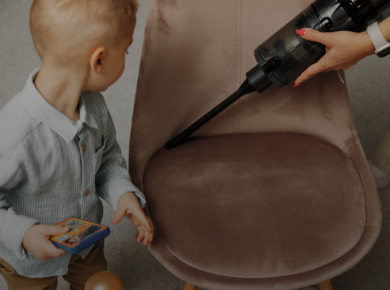

3 comments
Pretty article! I found some useful information in your blog, it was awesome to read, thanks for sharing this great content with my vision, keep sharing.
I agreed when you stated that robot vacuum cleaners can also accomplish wet cleaning. My friend told me that their central vacuum is malfunctioning. I think it’s time to hire a contractor that provides central vacuum in-house repair.
It does a good job of outlining the benefits and drawbacks of robot vacuums over conventional ones. I value thorough research since it helps readers choose the vacuum that best meets their needs. Vancouver Oven Repair The paper offers insightful information and touches on significant topics. Well done!